
Share Your Ideas
TheThinkLad is an open blogging platform where anyone can write articles and share their story with the world. Write with us.
TheThinkLad is an open blogging platform where anyone can write articles and share their story with the world. Write with us.
A complete guide for your first blog post

TheThinkLad
Jul 23, 2026
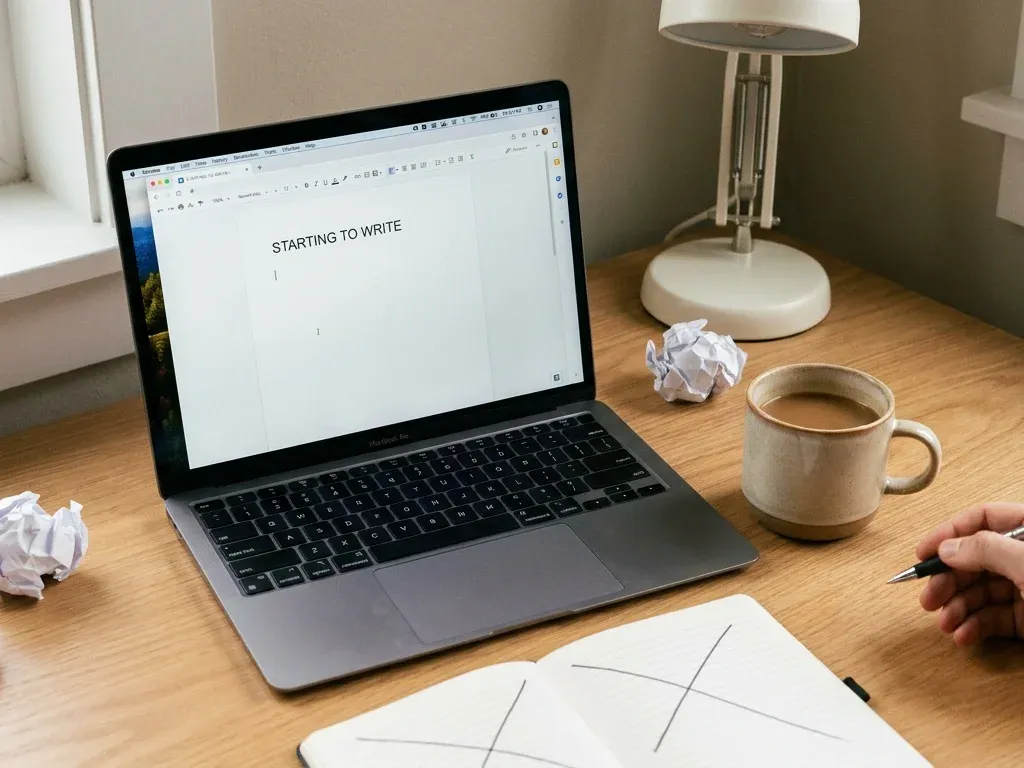
We understand how confusing it feels to write the first blog post. You open a blank page, type one sentence, delete it, and then wonder if the topic is even good enough. That happens to almost everyone in the beginning.
The truth is, your first blog post does not need to be something out of the ordinary. It does not need to sound like a polished piece of information from Wikipedia articles. It only needs to say something useful in a simple way.
If you are starting today, do not overthink it. Pick one topic and write what you know.
A lot of beginners try to choose a big topic because they think it will attract more readers. For example, they may choose “blogging” or “online business.” But those topics are too wide.
It is better to start with one small question.
For example:
How do I write my first blog post?
That is a simple question. It has a clear answer. And if someone is searching for it, they probably want practical help, not complicated theory.
So before writing, ask yourself:
Can I explain this topic to a beginner without making it confusing?
If the answer is yes, it is probably a good topic.
This is one mistake many new bloggers make. They try to write for everyone, and the post ends up feeling empty.
Instead, imagine one person reading your post. Maybe it is someone who wants to start a blog but feels nervous. Maybe they do not know how to choose a title, how long the post should be, or what tools to use.
Write for that person.
When you write for one person, your words become more direct. You stop trying to sound impressive and start trying to be useful.
You do not need a perfect outline. Just write down a few points before you start.
Something like this is enough:
What the post is about
Why beginners struggle with it
Steps to write the post
Tools that can help
Mistakes to avoid
Final advice
That small plan will stop you from getting lost halfway through the article.
This part is important. Do not edit every sentence while writing your first draft. If you keep fixing each line, you may never finish.
Write the first version quickly. Let it be messy. You can improve it later.
Your first draft is not the final post. It is just the raw material.
After you finish, read it again and ask:
Does this make sense?
Is anything repeated?
Is the introduction too long?
Would a beginner understand this?
Does it sound like me?
That last question matters a lot.
There is nothing wrong with using tools. Most writers use them in some way.
You can use:
Google Docs to write your draft
Grammarly to catch grammar mistakes
Hemingway Editor to make sentences easier to read
Google Keyword Planner or Ubersuggest to find keyword ideas
Canva to create a simple blog image
ChatGPT or Notion AI to brainstorm ideas or improve structure
But do not let tools write the whole post for you.
AI can help you organize ideas, but it often writes in a very polished and predictable way. That is one reason AI detectors may flag the content.
If you use AI, rewrite the post in your own words. Add examples. Add your opinion. Change sentences that sound too perfect.
AI detection tools like Originality.ai, Copyleaks, Writer.com, and ZeroGPT can be useful, but they are not always correct. Sometimes they mark human writing as AI, and sometimes they miss AI writing.
Still, if your article is showing a high AI score, it usually means the writing sounds too smooth, too general, or too repetitive.
To make it feel more human:
Use your own experience
Add small personal observations
Avoid perfect textbook-style paragraphs
Use some short sentences
Do not repeat the same structure again and again
Remove phrases that sound like generic advice
Read it aloud and fix anything that feels unnatural
A simple test is this: if you would not say the sentence to a real person, rewrite it.
Your first blog post will probably not be your best post. That is normal.
You will improve after writing more. You will understand your audience better. You will learn which topics work and which ones do not. But you cannot learn all of that by waiting.
So write the post, edit it, add a title, check the grammar, and publish it.
You can always come back later and improve it.
Writing your first blog post is mostly about getting started. Choose a small topic, think about the reader, make a rough plan, and write in your own voice.
Use tools if they help, but do not let them remove the human feeling from your writing. A good blog post does not need to sound perfect. It needs to feel honest, useful, and easy to understand.
Your first post is not the final version of your blogging journey. It is just the beginning.


Article Reactions
Reflections (0)