
Share Your Ideas
TheThinkLad is an open blogging platform where anyone can write articles and share their story with the world. Write with us.
TheThinkLad is an open blogging platform where anyone can write articles and share their story with the world. Write with us.
"I became what I am today at the age of twelve, on a frigid overcast day in the winter of 1975... It's wrong what they say about the past, I've learned, about how you can bury it. Because the past claws its way out." — Khaled Hosseini, The Kite Runner

Manoj shrestha
Oct 1, 2026
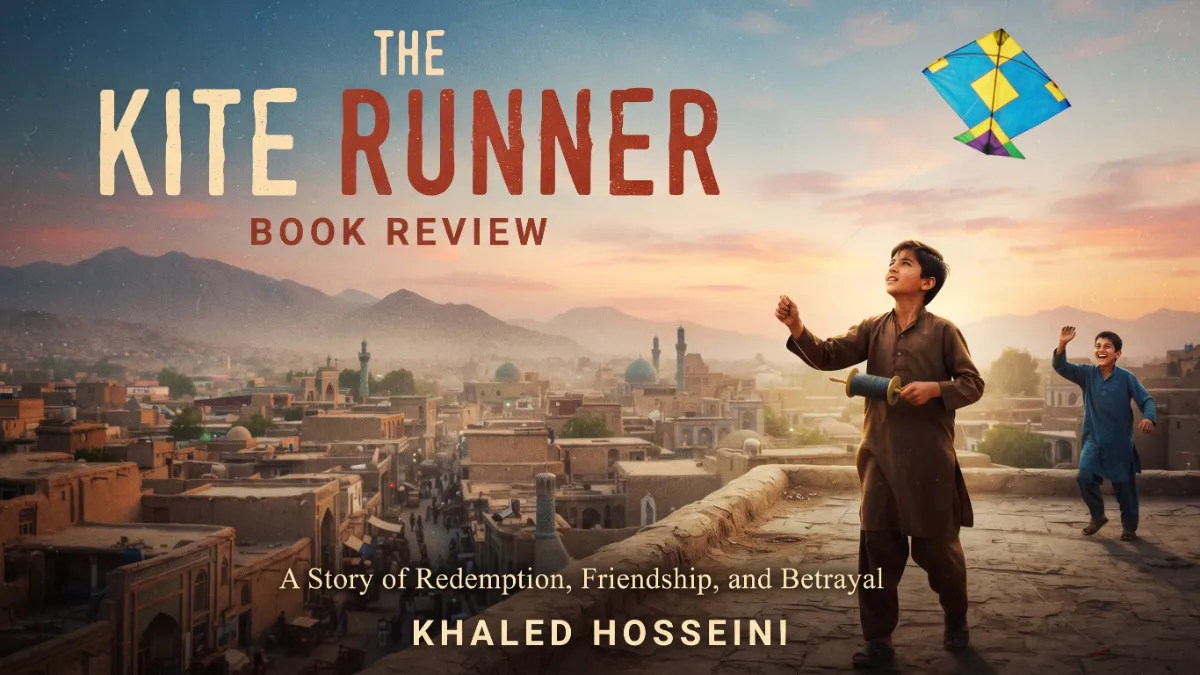
"For you, a thousand times over."
Few lines in modern literature carry the emotional weight of that single promise. When Khaled Hosseini published The Kite Runner in 2003, he didn’t just write a bestselling novel; he handed readers an unforgettable, gut-wrenching mirror reflecting guilt, betrayal, and the universal pursuit of grace.
Whether you are reading it for the first time or revisiting it decades later, the story of Amir and Hassan remains a monumental achievement in storytelling. Let’s break down why this novel continues to captivate us, and how you can structure your own thoughts if you are writing about it.
At its core, The Kite Runner is driven by a haunting premise: you cannot truly bury the past.
The book opens with Amir looking back from adult life in California to his childhood in a peaceful, pre-revolution Kabul. As a wealthy Pashtun boy, Amir shares an inseparable—yet deeply complicated—bond with Hassan, his loyal Hazara servant and companion.
When a moment of absolute cowardice leads Amir to betray Hassan during a winter kite-flying tournament, the resulting guilt becomes the anchor dragging down the rest of his life. Hosseini brilliantly illustrates how a single choice in childhood can cast a shadow over decades of adulthood.
Another layer that makes the novel resonate so deeply is its raw portrayal of parental expectations.
Amir and Baba: Amir spends his youth desperate to win the approval of his larger-than-life father, Baba, feeling like a disappointment because he prefers books to soccer.
The Cycle of Secrets: The novel explores how fathers pass down their unspoken regrets, pride, and hidden sins to their sons.
Hosseini reminds us that parents are rarely the invincible heroes children think they are; they are often just deeply flawed human beings trying to outrun their own ghosts.
What elevates The Kite Runner from a tragedy to a masterpiece is the theme of redemption. Amir is eventually offered a lifeline—a chance "to be good again". Returning to a war-torn Afghanistan ruled by the Taliban forces Amir to face his past head-on, risking his life to rescue Hassan’s son, Sohrab.
The narrative comes full circle in its final, breathtaking moments, showing us that redemption isn't about erasing our worst mistakes—it is about having the courage to finally stand up for what is right.
The Kite Runner is not an easy read. It forces us to confront uncomfortable truths about human weakness, societal prejudices, and our own capacity for forgiveness. Yet, it leaves us with a fragile, hard-fought glimmer of hope.
What about you? Have you read The Kite Runner, or watched the film adaptation? Drop a comment below and share how the ending made you feel!



Article Reactions
Reflections (0)